Caribbean Food Centennial: Marking 100 Years of Culinary Identity
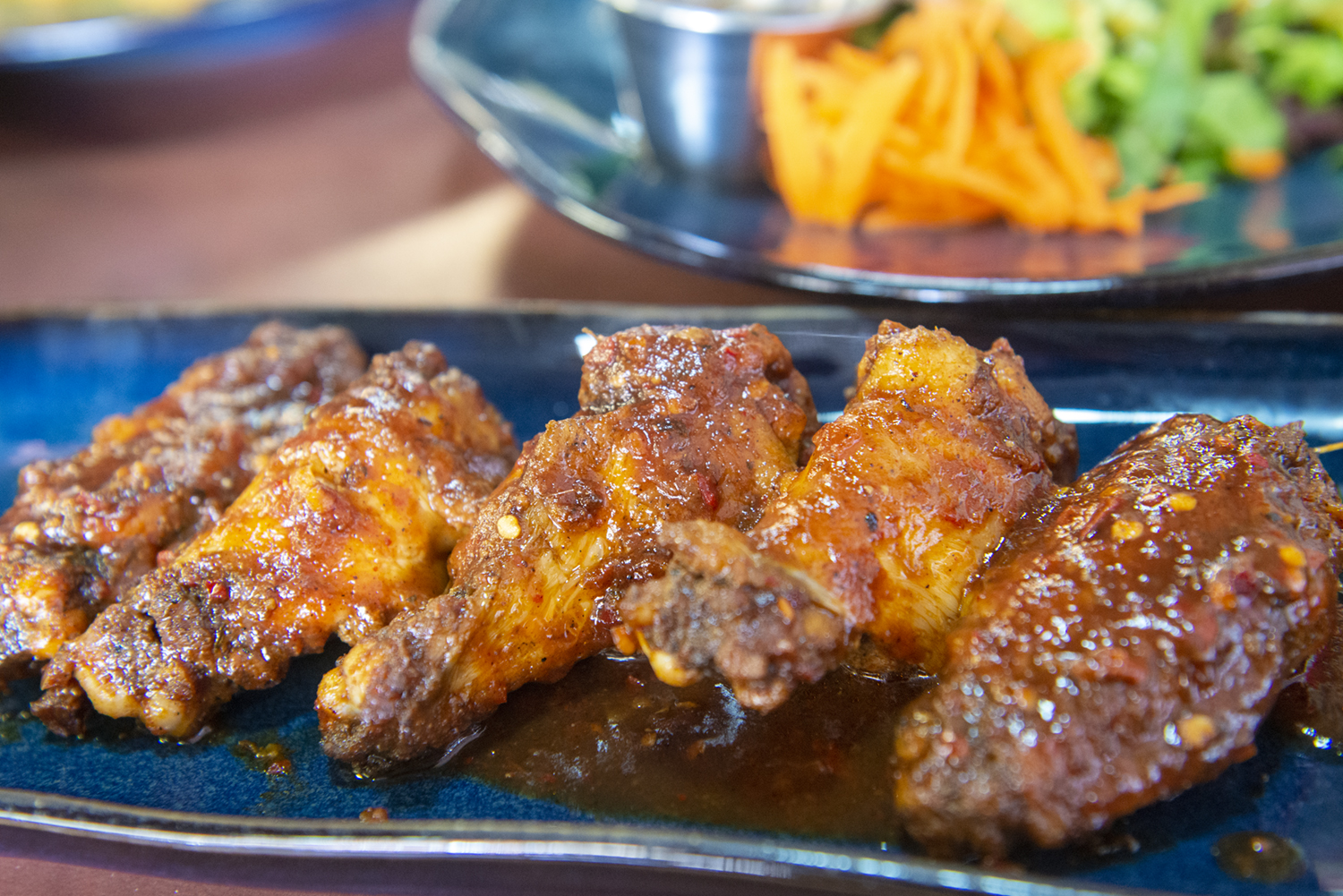
A centennial invites a particular kind of reflection. It asks what has lasted, what has changed, and what deserves protection before memory thins into slogan. When the phrase caribbean food centennial comes up, the real subject is larger than a date on a calendar. It is the story of how Caribbean people turned migration, empire, scarcity, abundance, ritual, and trade into a cuisine with unmistakable force. Over the past hundred years, that identity has sharpened, traveled, commercialized, and, in some places, been flattened for export. Yet it remains one of the most expressive food cultures in the world.
Caribbean food has never been a single cuisine in the narrow sense. It is a region of islands and coastal territories with overlapping histories and very different colonial inheritances. Spanish, French, British, Dutch, Indigenous, African, Indian, Chinese, Lebanese, Jewish, and later North American influences all left marks. The result is not confusion. It is structure. You can taste recurring logics across the region: the love of long marinades, the use of souring agents to brighten rich dishes, the marriage of starch and deeply seasoned protein, the respect for one-pot cooking, and the instinct to build flavor patiently rather than theatrically.
If one were to mark a hundred years of Caribbean culinary identity in practical terms, the strongest case begins in the early twentieth century, when urbanization, labor migration, printed cookbooks, hotel dining, and the growth of national consciousness started to codify what had long existed in homes, fields, fishing villages, and street stalls. Food moved from inheritance to declaration. Dishes still evolved at the stove, but they also began to stand for place.
The century in the pot
The first thing worth saying is that Caribbean food did not become meaningful only when it reached restaurants or tourism campaigns. Its core identity was forged under pressure long before that. Plantation economies imposed brutal constraints. Enslaved Africans preserved techniques and taste memories in conditions designed to erase both. Indigenous foodways endured in fragments and essentials, particularly around cassava, pepper, seafood, and methods of preserving and smoking. Indentured laborers from India later transformed the repertoire again, especially in Trinidad and Guyana, where roti, channa, cumin, and pepper sauces became local truths rather than imports.
What changed over the last hundred years was visibility and confidence. A dish like callaloo could still be humble, seasonal, and household-specific, but it also became legible as part of a wider culinary vocabulary. Jerk moved from local practice to emblem. Rice and peas, once simply dinner, became a national shorthand in Jamaica. Trinidadian doubles emerged from a specific Indo-Caribbean street tradition and then spread with astonishing speed, first across class lines, then across borders. In Puerto Rico, dishes such as mofongo and arroz con gandules became cultural anchors, not just familiar meals. In Barbados, flying fish and cou-cou carried local waters and colonial grain histories onto the same plate.
A century matters because it reveals which foods survive trend cycles. Flashy fusions come and go. The dishes that remain are the ones with social muscle. They feed crowds after funerals. They appear at Christmas whether or not anyone is hungry. They are sold from roadside pans, beach grills, church fêtes, and market stalls. They reappear in diaspora kitchens where ingredient substitutions are negotiated with care and occasional annoyance.
That durability is one reason the idea of a caribbean food centennial has emotional weight. It recognizes that culinary identity is not built by novelty alone. It is built by repetition, by the aunt who seasons meat the night before, by the vendor who knows exactly how much browning to add to a pot, by the cook who tastes soup before dawn and adjusts salt when no one is watching.
More than heat, more than sweetness
Outside the region, Caribbean food is still too often reduced to two clichés: spice and tropical fruit. Both are present, but neither captures the architecture of the cuisine.
Heat in Caribbean cooking is rarely there for bravado. Scotch bonnet and related peppers bring aroma as much as fire, with floral notes that can sit beside thyme, allspice, scallion, garlic, and citrus. Used well, pepper opens a dish rather than attacking it. A good jerk marinade does not taste only hot. It tastes resinous, smoky, slightly sweet, herbal, and deep. A pepper sauce that sits on a table in Trinidad or St. Lucia may sting, but it also sharpens fried fish, cuts through starch, and keeps the palate awake.
Sweetness also plays a more disciplined role than many visitors realize. Plantains ripen and soften the edge of savory dishes. Coconut enriches curries, stews, rice preparations, and sweets, but rarely in the cloying style expected by outsiders. Even where sugar shaped the economy, everyday cooking often treated sweetness as contrast rather than center. That is one reason a strong Caribbean meal feels balanced even when the plate is generous.
Texture matters just as much. Think of the crackle of fried fish skin against soft bammy. Think of the way a proper roti skin yields to a curry without disintegrating. Think of the dense, almost elastic comfort of fungi or cou-cou beside okra-heavy gravies. Good Caribbean food is tactile food. It asks you to notice chew, crunch, silk, starch, char, and broth.
Migration shaped the modern table
Any honest account of the past hundred caribbean food centennial years has to pay attention to movement. Caribbean culinary identity did not stay within island borders. It spread through labor routes, military service, education, shipping, tourism, and later the large migrations to Britain, the United States, Canada, and elsewhere.
This migration changed the food in two directions at once. First, it carried local dishes abroad. London, Toronto, Brooklyn, Miami, and parts of Amsterdam became secondary centers of Caribbean cooking. Patties were adapted for bakery cases and school lunches. Jerk found space in takeout shops and summer festivals. Roti shops became neighborhood fixtures far from the islands where the style matured.
Second, diaspora pressure altered the original cuisines back home. Returning relatives brought ingredients, appliances, expectations, and money. Imported chicken parts, tinned goods, seasoning packets, and later social media aesthetics changed cooking rhythms. Some changes improved access and reduced labor. Others narrowed flavor in pursuit of convenience. Anyone who has tasted both a curry made from fresh green seasoning and one built around a powdered shortcut knows the difference immediately.
The trade-offs are real. A frozen grated coconut product can save an hour and still produce respectable food. A bottled jerk sauce can be useful on a weeknight. But if every shortcut becomes permanent, a cuisine loses not just labor but judgment. The old methods taught timing, smell, and restraint. They trained cooks to know when onions had gone from raw to sweet, when pimento wood smoke had done enough, when cassava had reached the right stage for handling.
Over the last century, Caribbean food survived because families and small businesses kept transmitting that judgment even as ingredients and contexts shifted. Not perfectly, and not everywhere, but enough to preserve continuity.
National pride, regional kinship
One of the pleasures of writing about Caribbean food is the way pride operates on two levels. Every island, and every territory, can be fiercely specific. Jamaicans will defend the integrity of jerk and the proper handling of ackee. Trinidadians and Tobagonians will speak with justified certainty about doubles, pelau, bake and shark, and the importance of seasoning pepper. Bajans will insist on the place of flying fish and the structure of a proper pudding and souse. Haitians will point to griot, diri ak djon djon, and soup joumou as dishes tied directly to freedom and historical memory.
At the same time, there is deep regional kinship. A visitor moving across the Caribbean quickly notices recurring ingredients and techniques interpreted through local logic. Rice and beans appear in many forms, but the fat used, herbs chosen, and method of cooking can make one version immediately distinct reggaepotjamaicangrill.com caribbean food centennial from another. Fish stews may share a family resemblance while diverging in acidity, thickness, and pepper profile. Ground provisions such as yam, cassava, sweet potato, dasheen, and breadfruit circulate widely, yet they carry different social meanings depending on place.
This combination of specificity and kinship is part of what makes a centennial framing useful. It allows room for both local ownership and regional conversation. Caribbean culinary identity is not strongest when everything is blended into a generic island style. It is strongest when differences remain audible.
The role of street food and informal economies
Formal restaurants often get the headlines, but they are not where Caribbean culinary identity has done most of its heavy lifting. Over the past hundred years, the informal economy has been essential. Street vendors, market cooks, beachside grills, rum shops, small bakeries, and home-based caterers have preserved standards that glossy dining rooms later borrow.
In practical terms, this is where many classics stay honest. A roadside jerk pan with smoke in the air tells you more about living Caribbean flavor than a white-tablecloth tasting menu that uses jerk seasoning on an expensive cut of imported meat. A doubles vendor working the breakfast rush understands pace, texture, and balance in a way a trend-driven chef may never quite replicate. The same is true of women who sell soups on Saturdays, fish fry operators who know how weather affects oil temperature, and bakery owners who understand exactly how much crust a coco bread should carry.
Informal food businesses also helped women build economic stability in places where formal employment was limited or precarious. That history should never be treated as a footnote. Across the region, food entrepreneurship has long been a route to school fees, rent, home repairs, and social mobility. A centennial worth celebrating must include those cooks and sellers, not just famous names.
Hotels, tourism, and the problem of performance
Tourism expanded Caribbean food’s audience, but it also distorted the story. From the mid-twentieth century onward, hotels often presented a softened version of local cuisine, designed around foreign comfort rather than local truth. Spice levels dropped. Menus leaned toward grilled seafood, sweet sauces, and decorative fruit. Dishes with labor-intensive histories or strong textures were sidelined in favor of items that photographed well and offended no one.
There is a practical reason for some of this. Hotels serve guests with varied expectations, and consistency matters in commercial kitchens. Yet too much compromise can strip a cuisine of its intelligence. A pepperpot without depth, a curry without bloom, or a stew without enough browning is not a neutral adaptation. It is a loss.
The good news is that the past two decades have brought a corrective. More Caribbean chefs, writers, and food historians now insist that authenticity is not a costume. It is technique, sourcing, language, and context. Better restaurants across the region and in the diaspora have begun to treat local food with the seriousness it deserves, not by freezing it in time, but by understanding its grammar before trying to improvise.
Ingredients that carry memory
If the past hundred years have taught anything, it is that ingredients are never just ingredients. They are records of trade, climate, labor, and migration. Saltfish speaks to preservation and empire. Breadfruit recalls forced botanical transfer and then centuries of local adaptation. Sorrel marks Christmas tables across parts of the region with a ritual force stronger than any marketing campaign. Cassava carries Indigenous inheritance into the present. Pigeon peas, coconut milk, thyme, cloves, ginger, allspice, green banana, and fresh fish all tell stories if handled with attention.
Some of the most revealing shifts in Caribbean food over the last century can be traced through what became scarce, what became aspirational, and what remained ordinary. Imported wheat flour reshaped baking traditions in many territories. Tinned corned beef became, for some households, a practical protein and later a nostalgic one. Chicken, once more occasional in certain settings, became common through industrial supply chains. Certain local fish grew expensive or harder to source. In many islands, young cooks now know supermarket versions of ingredients better than the seasonal rhythms their grandparents followed.
That does not make the present inauthentic. It does, however, create a responsibility to notice what is being lost. Culinary identity survives best when memory is not romanticized but used. A cook who understands why breadfruit mattered, how saltfish entered the pantry, or when fresh turmeric was replaced by imported powder can make sharper choices in the kitchen today.
Celebration has to include difficult truths
A centennial can become sentimental if it only praises resilience. Caribbean food is magnificent, but its history is inseparable from violence, extraction, and inequality. Sugar wealth for some meant suffering for many. The movement of spices, laborers, and crops was often coerced. Plantation logics still echo in land use, wages, and access to good food.
Modern public health concerns belong in the same conversation. Across the region, rising rates of diabetes, hypertension, and diet-related illness have changed the way many families think about beloved dishes. This creates tension. Some recipes are rich because they came from feast days or from hard labor economies where calories were urgently useful. Others have become heavier over time because processed ingredients grew cheap and convenient.
Good judgment here matters. It is lazy to blame tradition for modern health problems. Much of the issue lies in industrial food systems, sedentary work, and reduced access to fresh ingredients. At the same time, no cuisine benefits from pretending that every inherited habit should remain untouched. The strongest Caribbean cooks I know are capable of both loyalty and adjustment. They may reduce salt, trim excess oil, or rebalance starch portions without surrendering flavor. They understand that preservation is not fossilization.
What deserves protection over the next hundred years
The future of Caribbean culinary identity will depend less on branding and more on transmission. Young cooks need recipes, yes, but they also need context. They need to know what green seasoning should smell like before it hits the pot. They need to understand that a stew can fail because the browning was rushed, that coconut milk behaves differently depending on freshness and fat content, and that pepper can be layered rather than dumped in.
Several priorities stand out if the spirit of a caribbean food centennial is to mean anything beyond festival speeches.
First, ingredient literacy matters. Children and young adults should encounter breadfruit, cassava, dasheen, pigeon peas, fresh herbs, and local fish as living foods, not relics named by elders. School gardens, markets, and community cooking programs can do more here than glossy campaigns ever will.
Second, oral knowledge needs recording without being over-disciplined. Many of the best Caribbean cooks do not measure in standard units. They cook by color, scent, and feel. That knowledge can be documented, but only if interviewers respect process rather than forcing every dish into rigid recipe language.
Third, small food businesses need policy support. A region cannot celebrate culinary heritage while making life harder for the vendors and family-run shops that carry it day to day. Licensing, market access, training, and financing all matter.
Fourth, chefs should be encouraged to innovate from understanding rather than distance. Reinvention is welcome. Confusion is not. A contemporary dish that knows its lineage can be thrilling. A decorative plate that borrows Caribbean ingredients while ignoring Caribbean technique usually feels hollow.
Finally, climate pressure has to be faced directly. Hurricanes, heat stress, coastal change, and shifting fisheries are not abstract threats. They affect cassava yields, fish availability, market prices, and the continuity of local ingredients. Protecting Caribbean food over the next century will require agricultural adaptation as much as culinary pride.
The plate as archive
Food historians often talk about documents, but in the Caribbean the plate itself functions as an archive. It stores memory in ways text cannot fully capture. A soup served on New Year’s Day, a black cake fed with rum and fruit for months, a Saturday oil-down, a Friday fish meal, a wake table, a carnival snack after midnight, these are not random eating events. They are social records.
I have always found that the strongest Caribbean meals carry a kind of double awareness. They are immediate and historical at once. You taste smoke, pepper, lime, thyme, coconut, or cassava in the present tense, yet the dish also points backward to trade routes, labor systems, family habits, and local ecologies. Few world cuisines manage that balance so naturally.
That is why a hundred-year marker matters even if no single founding date can contain the region’s food story. The centennial frame gives us a reason to pause and name what the Caribbean has contributed to global eating. Not just ingredients, and not just famous dishes, but a way of cooking that values patience, bold seasoning, thrift without meanness, celebration without apology, and adaptation without surrender.
The next century will bring more fusion, more migration, more climate strain, and more digital influence on how food is taught and sold. Some dishes will change beyond recognition. Others will remain stubbornly themselves. The test will not be whether Caribbean food stays frozen in a museum state. It will be whether the region and its diaspora keep hold of the knowledge underneath the flavor.
When that knowledge survives, the food does more than feed. It names people to themselves. It turns history, however fractured, into something warm, fragrant, shared, and unmistakably alive.
Reggae Pot Jamaican Grill
Address: 7562 S University Blvd Unit C, Centennial, CO 80122
Phone: (303) 997-5623
FAQ About caribbean food centennial
What Jamaican dishes can I try in Centennial?
Reggae Pot Jamaican Grill serves Jamaican specialties such as jerk chicken, stewed oxtail, curry goat, and ackee and saltfish. Check the current menu for availability.
What is ackee and saltfish?
It is Jamaica’s national dish. The restaurant prepares ackee with salted cod, onions, thyme, tomatoes, garlic, black pepper, and pimento.
Can I order Jamaican food for pickup in Centennial?
Yes. Choose the Centennial location at 7562 S University Blvd Unit C when placing a takeout order.